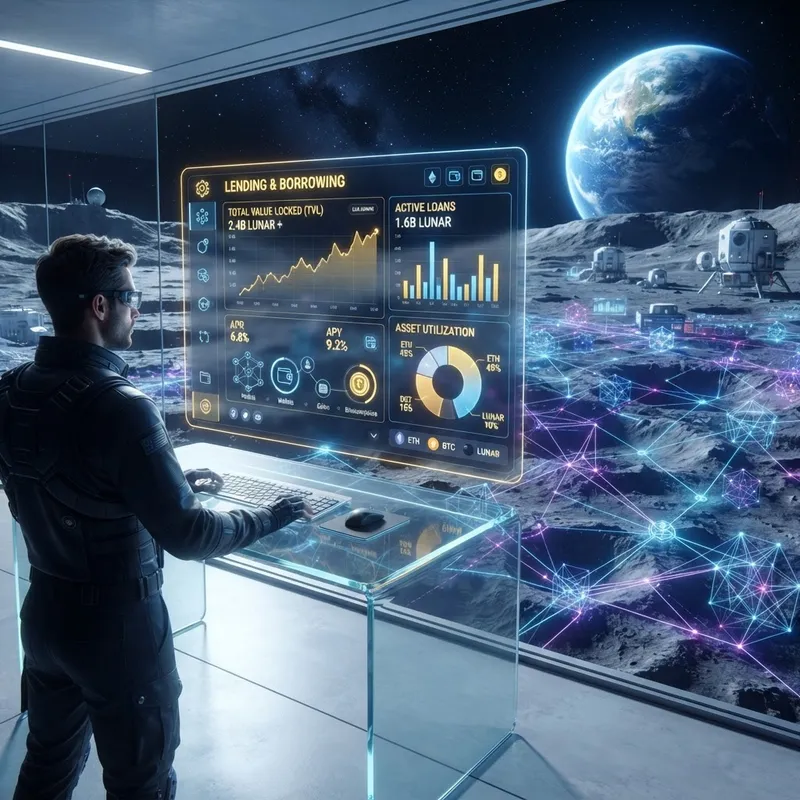
The Rise of Moonwell in the Decentralized Landscape
In the rapidly shifting world of decentralized finance (DeFi), few protocols have demonstrated the adaptability and resilience of Moonwell. Originally conceived as a premier lending and borrowing platform for the Polkadot and Kusama ecosystems, Moonwell has successfully transitioned into a multi-chain powerhouse. Today, it stands as a dominant force on the Base network and has recently made significant inroads into the Ethereum Mainnet, fulfilling its mission of making lending made simple for a global audience.
Moonwell operates as an open, non-custodial protocol that allows users to put their digital assets to work. By depositing assets into liquidity pools, lenders can earn interest, while borrowers can access liquidity by providing collateral. This fundamental utility is powered by the WELL governance token, which empowers a decentralized community to steer the protocol’s future. As the DeFi landscape matures, Moonwell’s focus on user experience and cross-chain interoperability has positioned it as a critical piece of infrastructure for the next generation of onchain finance.
Strategic Expansion and the Shift to Base
While Moonwell’s roots are firmly planted in the Moonbeam and Moonriver networks, the protocol’s recent trajectory has been defined by its expansion to Layer 2 solutions. According to Moonwell Docs, the protocol is currently active across Base, Optimism, Moonbeam, and Moonriver. However, the most significant growth has occurred on Base, Coinbase’s incubated L2, where Moonwell has become a primary destination for liquidity.
This shift was further solidified by a recent governance decision to sunset the deployment on the Moonbeam Network by July 31, 2026. This strategic pivot reflects a broader industry trend where protocols are consolidating liquidity on high-growth networks that offer better integration with retail-facing platforms. By focusing on Base and Ethereum Mainnet, Moonwell is aligning itself with the most active user bases in the current market cycle.
USDC Anywhere: Solving Liquidity Fragmentation
One of Moonwell’s most innovative contributions to the DeFi space is the “USDC Anywhere” feature. In a multi-chain world, liquidity is often fragmented across different networks, forcing users to navigate complex bridges and high fees to move their funds. Moonwell’s solution, powered by Circle’s Cross-Chain Transfer Protocol (CCTP), allows users to supply and borrow USDC across multiple networks seamlessly.
As detailed in the USDC Anywhere Overview, this tool enables a user to supply USDC from one chain and have their position land on Base automatically. “Our goal has always been to strip away the complexities of decentralized finance,” says a spokesperson for the Moonwell community. “By integrating features like USDC Anywhere, we are effectively hiding the ‘bridge’ from the user, making the multi-chain experience as fluid as a single-chain one.” This focus on simplicity is a core tenet of the protocol, aimed at lowering the barrier to entry for new DeFi participants.
Technical Architecture and the mToken Model
At its core, Moonwell utilizes a battle-tested lending model inspired by the Compound protocol. When a user deposits assets into Moonwell, they receive “mTokens” in return. These tokens represent the user’s share of the lending pool and accrue interest over time. For example, depositing ETH results in the receipt of mETH. These mTokens can then be used as collateral to borrow other assets, such as stablecoins or wrapped versions of popular cryptocurrencies.
The protocol’s reliance on smart contracts ensures that all operations are transparent and trustless. As noted by Messari, Moonwell provides a non-custodial platform where users maintain control over their funds, governed by code rather than centralized intermediaries. This transparency is further enhanced by the Moonwell SDK, which allows developers to build on top of the protocol, retrieving market data and managing user positions programmatically.
Navigating Security Challenges and Protocol Resilience
The journey has not been without its hurdles. Like many leading DeFi protocols, Moonwell has faced sophisticated attacks and technical glitches that have tested its governance and security frameworks. In August 2026, security firms flagged a multimillion-dollar exploit on the Base network. Attackers manipulated the price of MAMO collateral to borrow approximately 50.6 cbBTC, valued at over $4 million.
Earlier in the year, the protocol dealt with an AI-coded oracle glitch that mispriced cbETH, leading to a $1.78 million drain. Furthermore, the Moonriver deployment faced a governance attack where a relatively small token purchase was used to push a malicious proposal. In each instance, the Moonwell community and the developers at Lunar Labs responded with transparency and speed. Recovery plans were proposed, such as the $2.68 million plan following the cbETH incident, demonstrating a commitment to protecting users and maintaining the protocol’s integrity.
Community Governance and the WELL Token
Governance is the heartbeat of Moonwell. The protocol is managed by a decentralized autonomous organization (DAO) where WELL token holders vote on Moonwell Improvement Proposals (MIPs). These proposals cover everything from adding new asset markets to adjusting risk parameters and deploying the protocol to new chains.
“Security is a continuous journey, not a destination,” notes a lead developer at Lunar Labs. “The challenges we have faced have only served to harden the protocol, leading to more robust oracle configurations and faster response times from our security partners.” The community-driven nature of Moonwell ensures that no single entity has control, making the system more resilient to censorship and centralized failure. This distributed decision-making process is essential for a protocol that aims to be a permanent fixture of the global financial system.
Innovative Assets and AI Integration
Moonwell continues to push the boundaries of what is possible in DeFi by integrating unique assets and emerging technologies. The protocol has recently embraced the “Virtuals Protocol,” allowing users to supply VIRTUAL tokens or borrow against them to launch AI agents. This intersection of AI and DeFi represents a new frontier for the protocol, attracting a diverse range of developers and speculators.
Additionally, Moonwell has integrated institutional-grade assets like Coinbase’s cbXRP and cbBTC, providing a bridge between traditional crypto holdings and productive DeFi utility. By allowing users to bring their XRP or Bitcoin to Base and put it to work, Moonwell is expanding the utility of these major assets beyond simple HODLing. The protocol’s ability to adapt to new asset classes while maintaining a simple user interface is a key driver of its ongoing adoption.
The Road Ahead for Moonwell
As Moonwell continues to evolve, its focus remains on the core principles of decentralization, transparency, and simplicity. The expansion to Ethereum Mainnet and the deepening of its roots on Base suggest a future where Moonwell is the primary liquidity layer for the Ethereum ecosystem’s most active users. With a robust SDK for developers, a proactive governance community, and a suite of innovative features like USDC Anywhere, Moonwell is well-positioned to navigate the complexities of the multi-chain future.
The protocol’s journey from a Polkadot parachain experiment to a leading Ethereum L2 lending market serves as a blueprint for other DeFi projects. By prioritizing user experience and responding decisively to security challenges, Moonwell has built a brand that stands for reliability in an often-volatile industry. As the protocol moves forward, the integration of more diverse assets and the refinement of its cross-chain capabilities will likely remain at the forefront of its development roadmap.